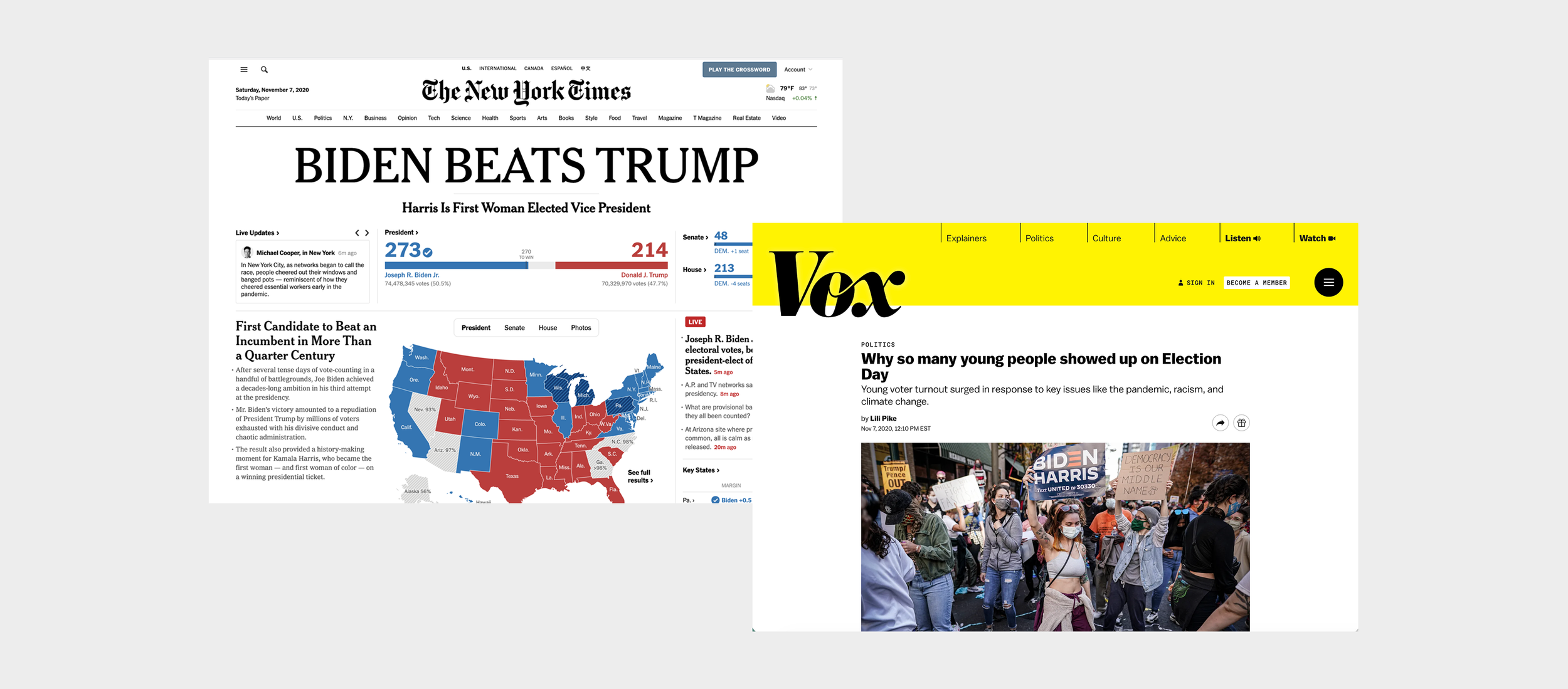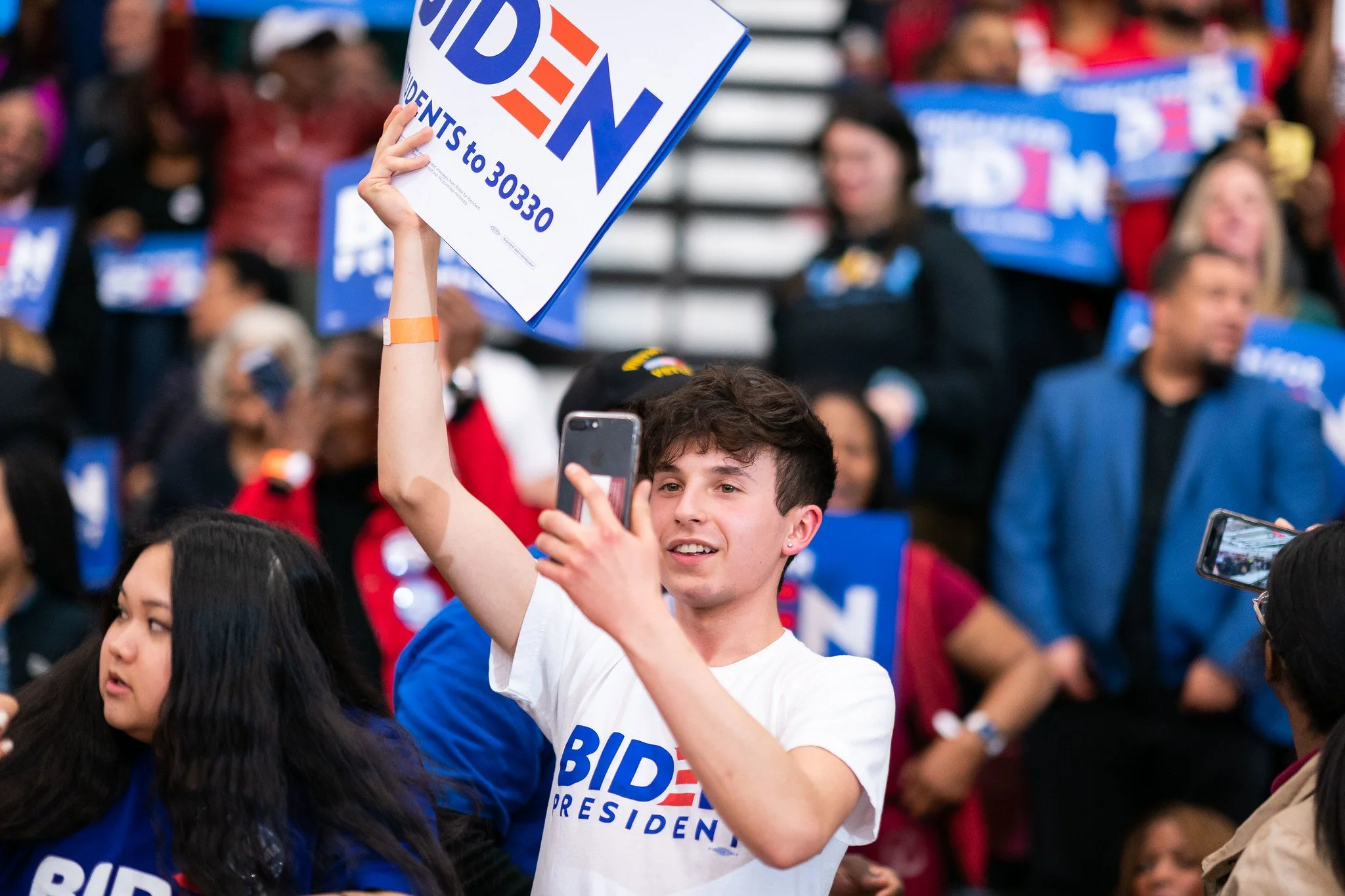
Getting young people to vote in 2020
While creative director at Assemble the Agency, I led creative strategy and production for a nine-figure ad campaign persuading young voters to turn out in the 2020 presidential election. This campaign won a 2021 Webby Honoree award.
ROLE
Creative direction, art direction, design
AGENCY
Assemble the Agency
CLIENT
Future Majority
DESIGNERS & EDITORS
Ian Harrington, Paul Lamontagne
The challenge
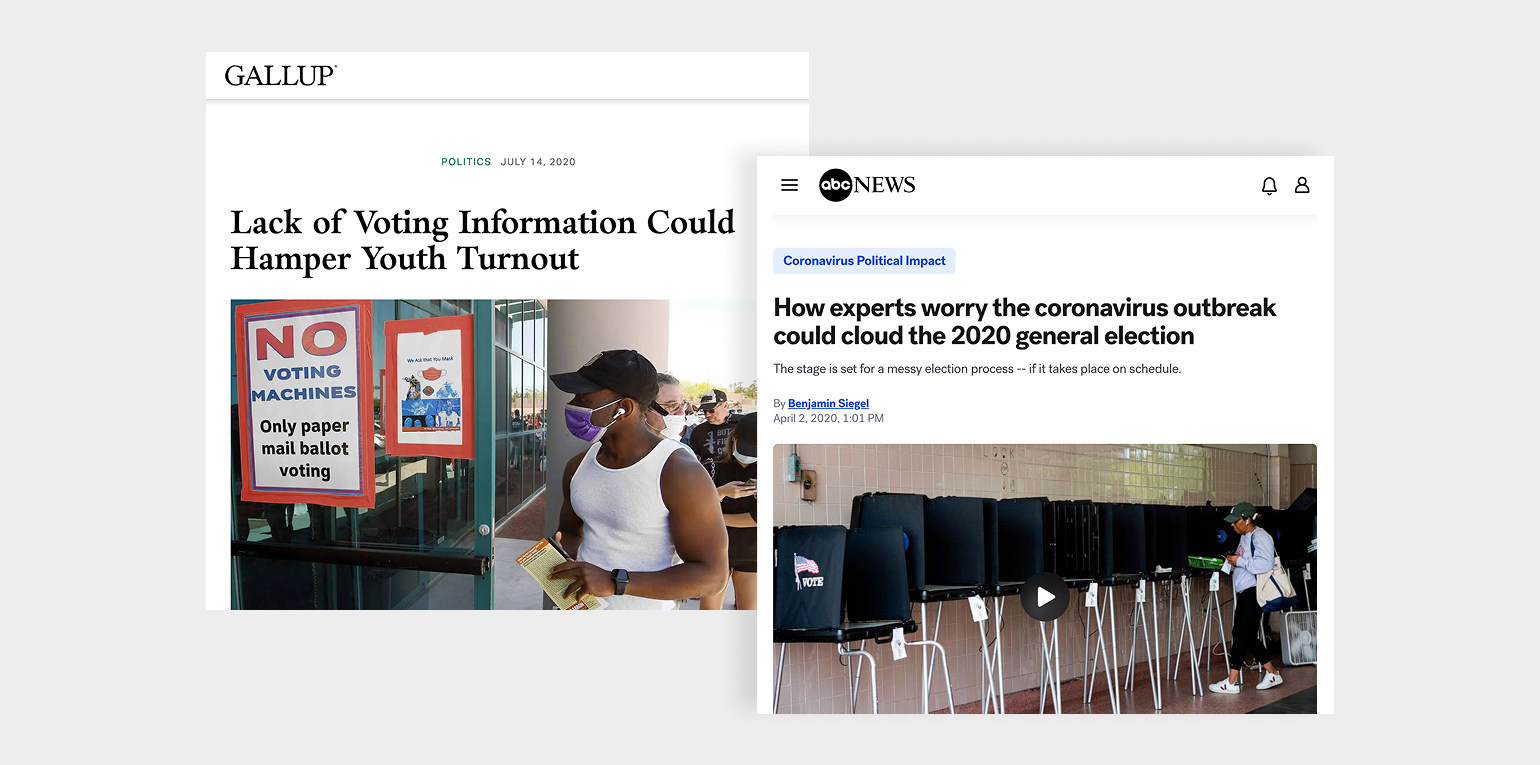
In the summer of 2020, Trump was nearing the end of his first term in the White House and fighting for reelection. After Joe Biden emerged from a crowded primary, the general election was polling close across key swing states, indicating that the outcome might come down to which party could motivate more voters to cast a ballot.
But the pandemic was upending voting. Fears about the safety of going to the polls on Election Day raised the prospect of low turnout. States were trying to address the problem with expanded early and mail-in voting, but struggled to set and communicate the changes, resulting in widespread confusion about how to vote.
Beyond the logistical issues, young people were expressing increasing disillusionment with both political parties.
Our client, Future Majority, charged us with developing a strategy to reach young voters, motivate them to vote, and persuade them to cast their ballots for Joe Biden.
The strategy
Targeting
With the top-level goal of impacting the presidential election, we first narrowed our focus to nine target states. We focused on winning back the “blue wall” states that Hillary Clinton lost in 2016, defending swing states that went blue in 2016 but needed extra resources, and expanding into battlegrounds with a significant number of voters under the age of 40.
Offense: Wisconsin, Michigan, Pennsylvania
Defense: Minnesota, Nevada, New Hampshire
Expansion: Ohio, Iowa, Florida
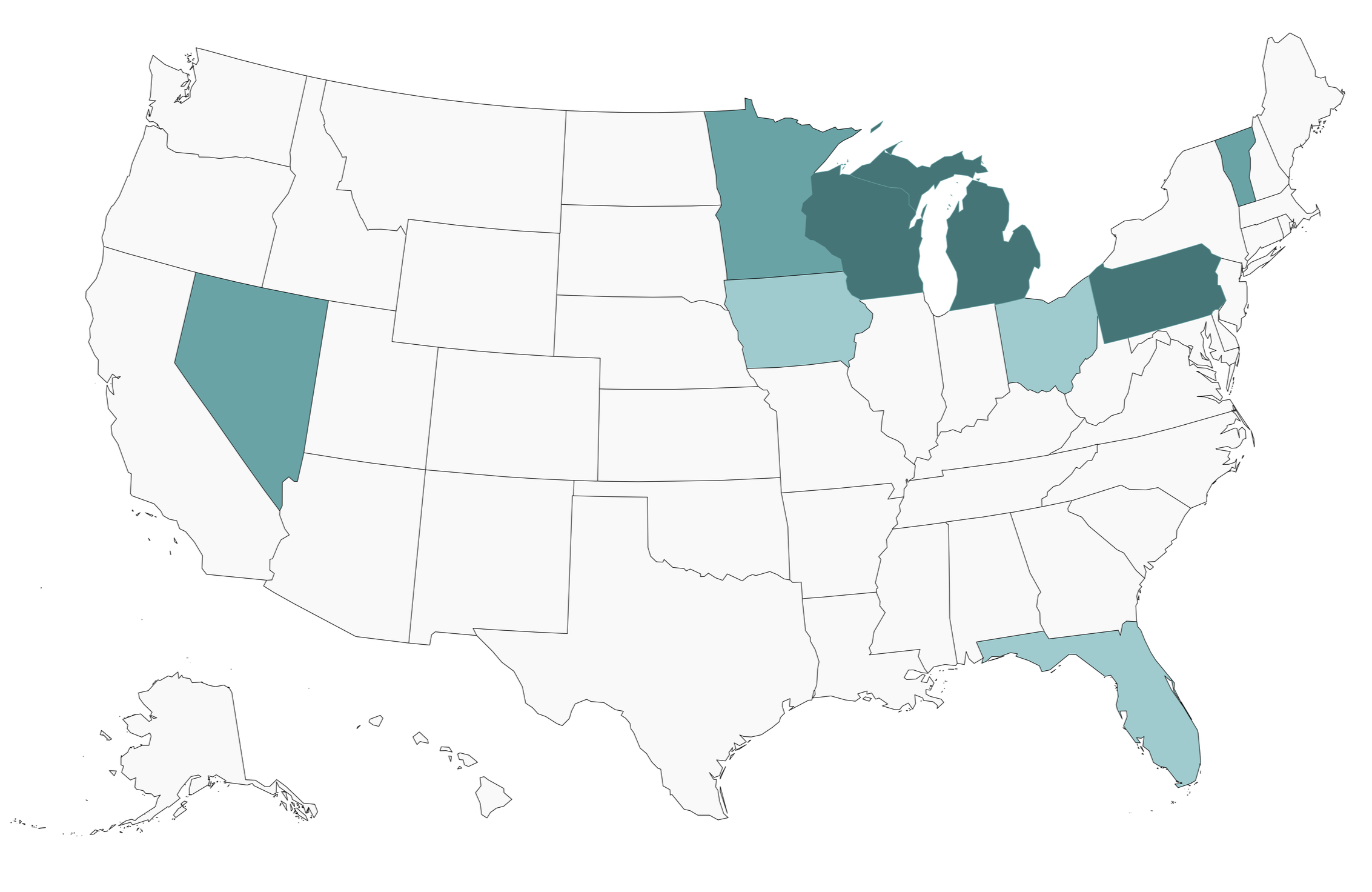
We identified under-40 voters on the fence about voting but likely to vote for Biden if they did, then used state voter file data to reach them on across digital platforms including Meta, Snapchat, YouTube, and connected TV.
Messaging
Vote for the issues. Through polling, we knew that our target young voters tended to be more motivated by issues than by candidates. Our content therefore focused on how voting in the 2020 election could affect the issues they cared about most, including reproductive freedom, health care, the economy, and access to jobs.
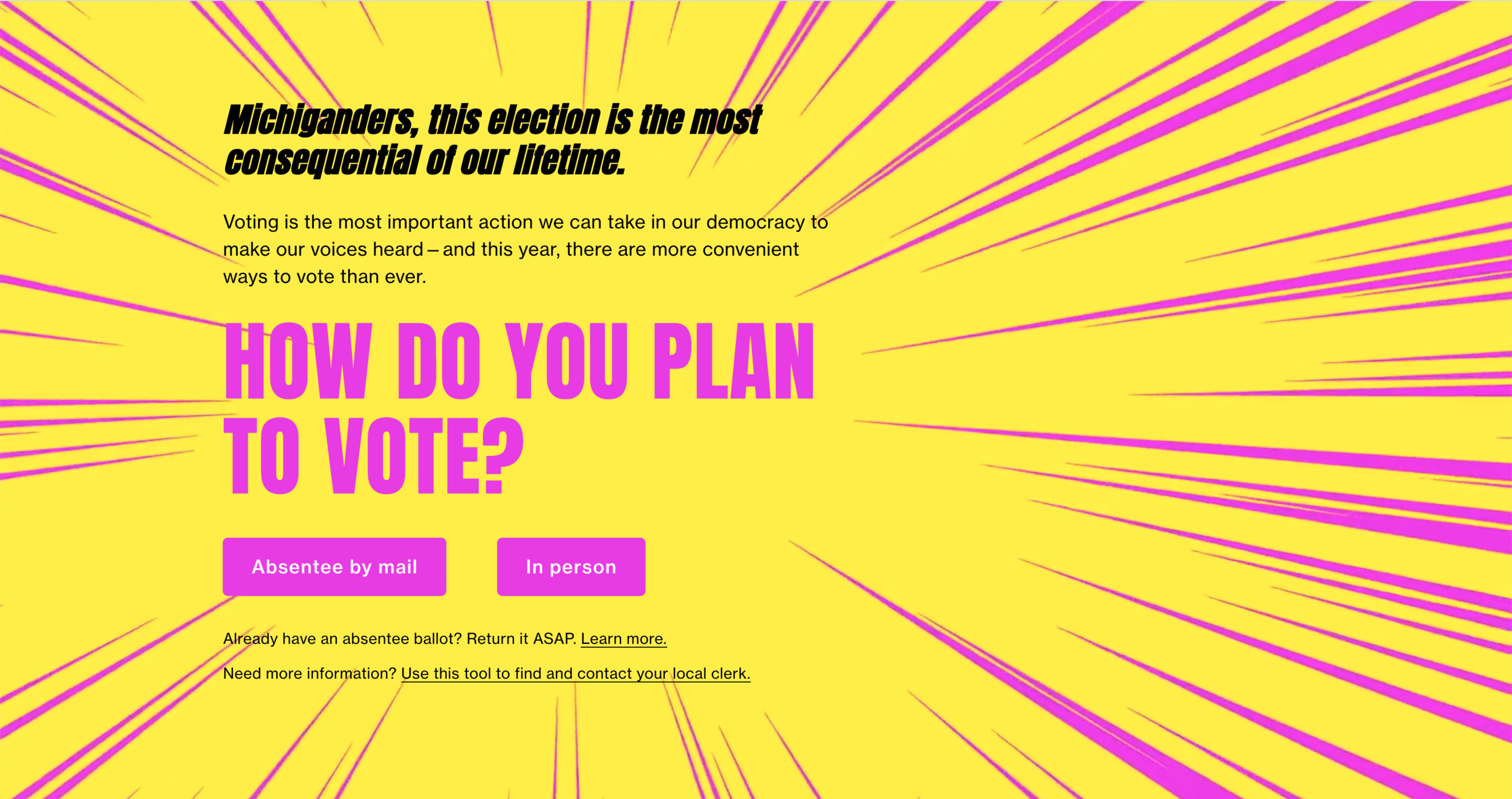
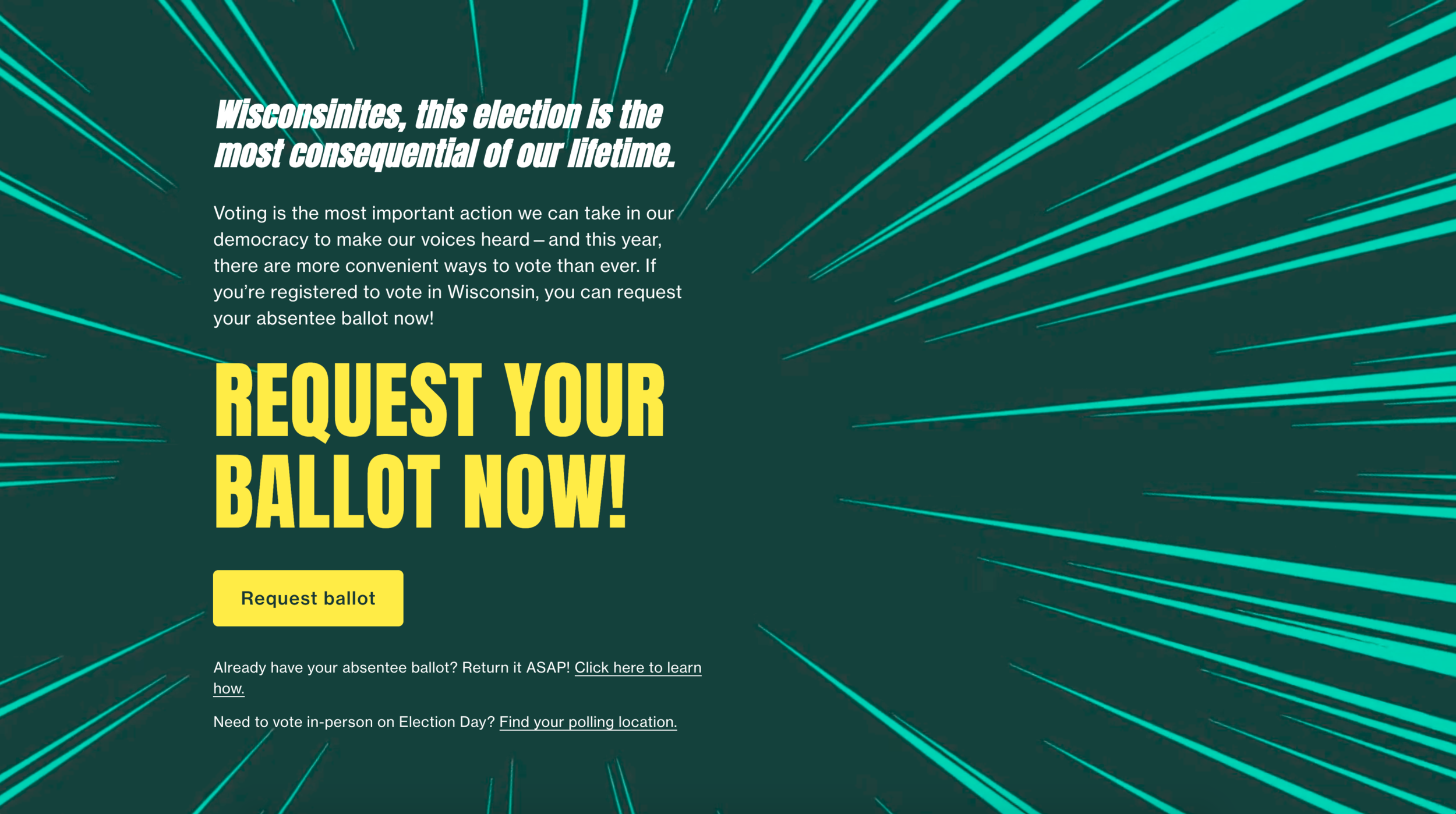
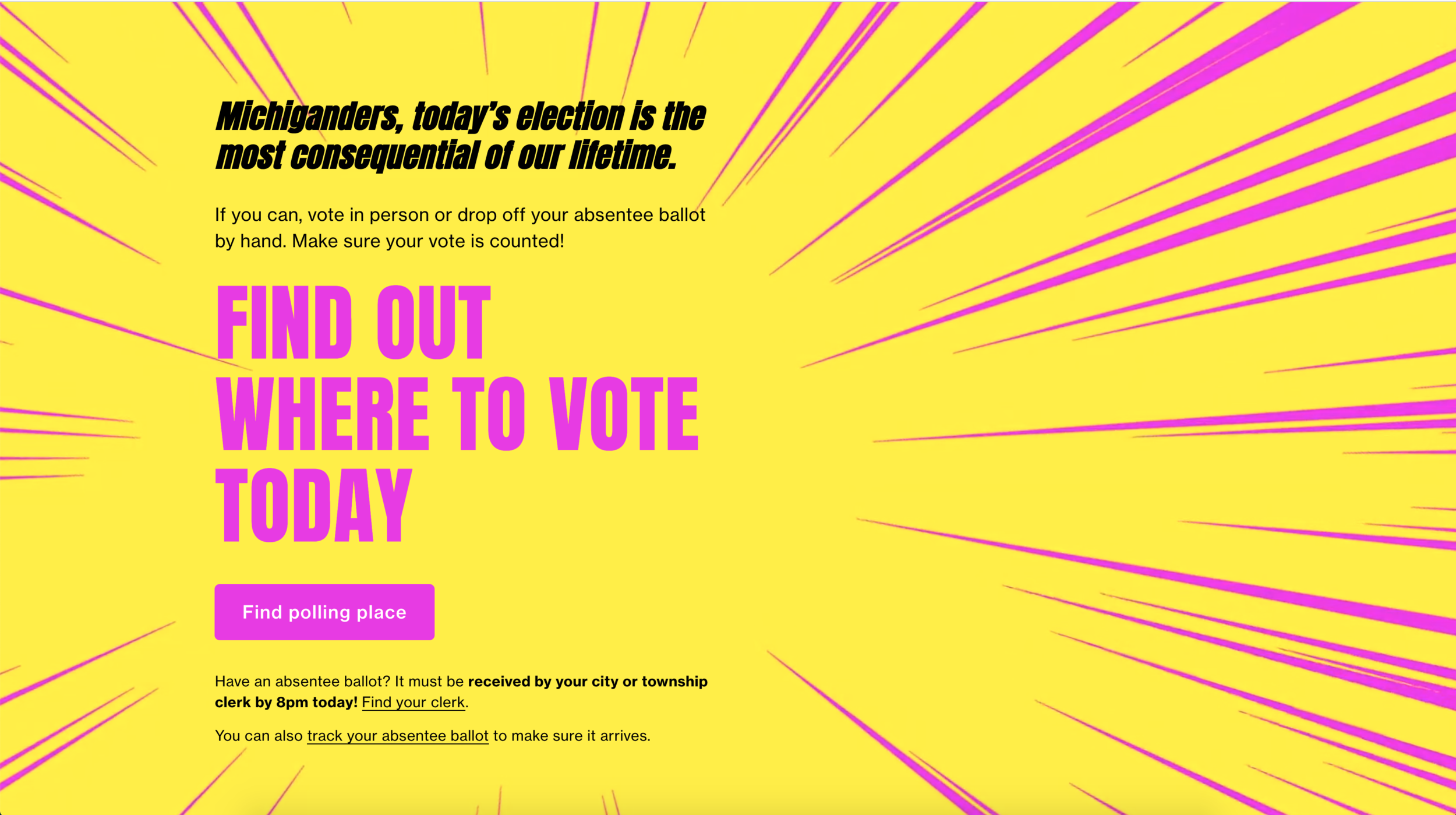
How to vote. To help voters sort through the confusing variety of methods and deadlines for voting, we also knew that it would be critical to include concrete, easy-to-understand information about how to vote. We tailored our creative for each state in which we were active to present voters only with relevant information.
Vote early. Finally, we layered on encouragement to vote early to mitigate the possibility of low turnout driven by confusion about in-person Election Day voting during the pandemic. It also helped increase the efficiency of our program, which had to compete in an increasingly crowded media environment as we approached Election Day.
The creative
We used polling data to inform a wide variety of creative tracks over the course of our multi-month campaign, developing bespoke creative around messaging that resonated with different audience subsets to ensure our targets saw content about the issues most important to them. As our campaign returned real-world insights, we iterated on the creative assets that worked best.
We customized our creative assets for each platform, developing multiple versions in different lengths and formats to make sure viewers received the key part of our message no matter what device they were using.
Here’s a sample of our 30-second video creative:
HEROES
This video, which linked voting to safeguarding the right to choose, was targeted to audiences interested in reproductive health care. Across platforms, it generated 44% higher video completion rates and 67% more clicks to our landing pages among women aged 18–29.
WE CAN’T WAIT
Across audiences, the economy was the top issue. With this spot, we sought to tap into the sense of exclusion from opportunity that many younger voters experience. This piece achieved our highest overall click-through rate at 0.34%.
RUTHLESS
When Justice Ruth Bader Ginsburg died, the stakes of the race sharpened. To take advantage of the moment, my team moved fast to script and produce this spot helping connect health care to their votes. This was our most-clicked creative, Over 100,000 people clicked this ad, the highest raw number of any creative on our campaign.
HOW THE DUCK
To break through the noise in an increasingly crowded advertising landscape, we used humor to grab attention and guide people to state-specific websites that made voting information clear and easy to understand.
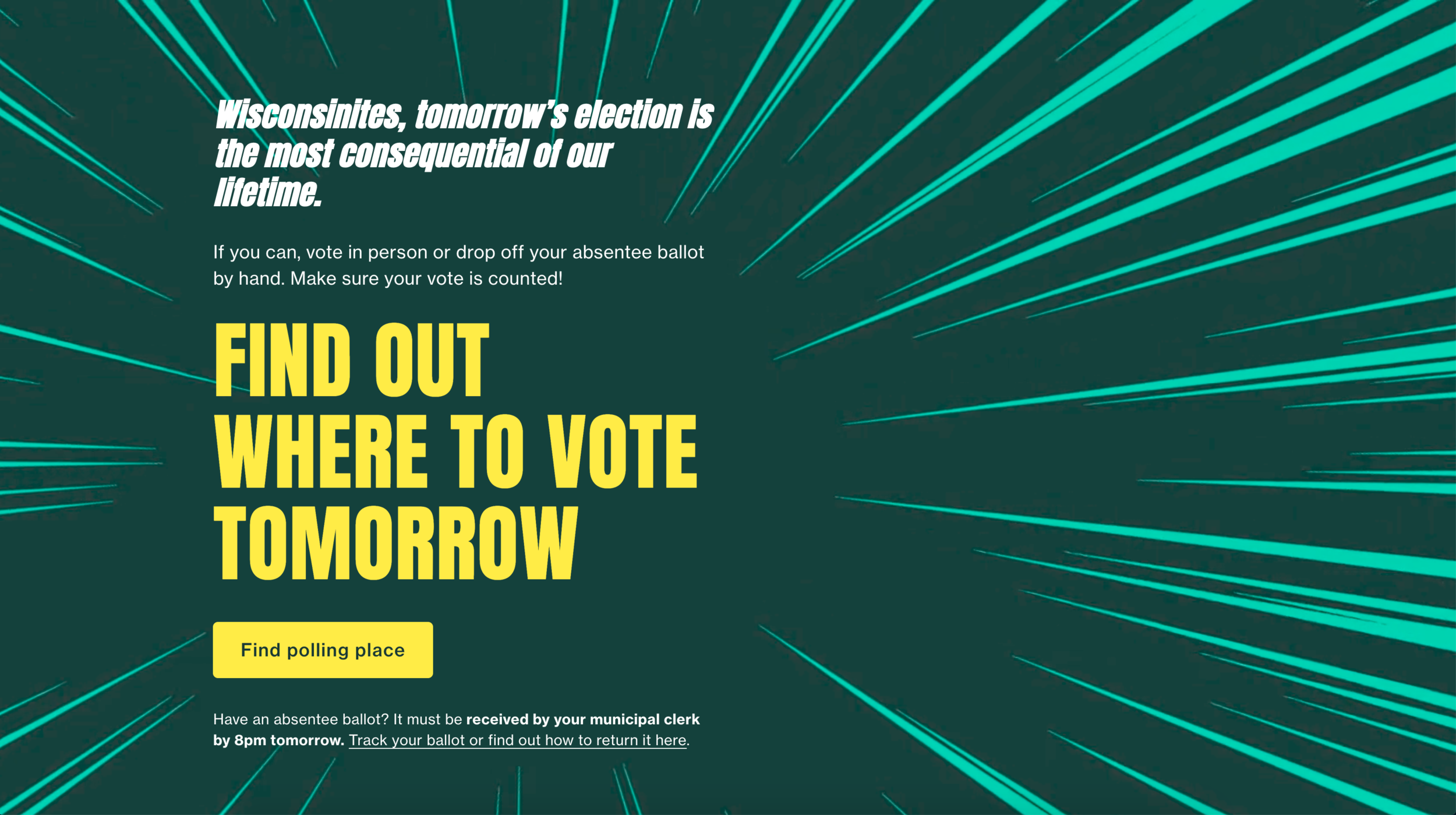
We designed and built dedicated voter education landing pages for every state. Each site was customized with state-specific details and updated continuously as ballot request deadlines, early voting windows, and cutoff dates for mailing ballots opened or closed. Our objective was to make the easiest and most valuable voting action in each state on any given day exceptionally clear while requiring minimal clicks.
The outcome
Electoral victory. Biden won all six of the “blue wall” pick-up states and must-defend states in which our campaign was active, winning the election.
Measurable persausion. Our ads drove a 5.2% lift in intent to vote and a whopping 11.8% lift in intent to vote for Biden, measured through in-market digital surveys fielded before and after exposure to our ads.
18% conversion rate. While public data doesn’t allow for tracking which members of our target audiences cast a ballot, 18% of the 1.06 million people who landed on our simplified, streamlined landing pages took the next action to find more information on how to vote.
Higher early voting rates. In our target states, significantly higher proportions of under-50 voters voted early or absentee. In our offense states (Wisconsin, Michigan, and Pennsylvania), we saw a 704% increase over the previous cycle, and in our defense states (Minnesota, Nevada, and New Hampshire) we saw a 175% increase. Our expansion states saw a 65% increase.